
How Do You Transform a Kitchen Without Expanding the Footprint?
This Overland Park kitchen remodel proves that square footage is not what transforms a space. Strategic design, disciplined planning, and correcting hidden issues created a kitchen that feels larger and works better without moving a single wall.
Some remodels succeed not because the space is expanded, but because every square foot is made to work with greater intention. In this Overland Park kitchen and dining-room bar renovation, Stag Homes applied that philosophy through disciplined planning, thoughtful design, and steady problem-solving.
But don’t just take our word for it, read the review from the client themself:
“Stag Homes remodeled my kitchen and dining room and did an absolutely amazing job! Though the update used my original footprint, it has made that space look completely new and different. The attention to detail and willingness to work with my ideas, was awesome. They showed up every day, which has not been my experience with other remodelers, and they stuck with it until it was completed to my satisfaction! I love my new look and updated additions, and would HIGHLY recommend them for any remodeling you are dreaming of!”
Project Goals for This Overland Park Kitchen Remodel
The homeowners had worked with Stag Homes once before on an outdoor kitchen and patio retreat. They knew the value of a guided, structured process, especially when updating a space with a long renovation history.
Their kitchen felt outdated and lacked the function they needed for everyday living and entertaining. The adjoining dining-room bar area added potential, but it didn’t yet feel integrated. What the clients wanted was simple:
- A kitchen that worked better without changing the footprint
- A design that felt tailored rather than generic
- Better storage, better flow, and a more connected entertaining experience
They came in with a clear vision of what wasn’t working. The challenge was determining how to elevate the space without unnecessary construction.
Working Within the Footprint: A Design Approach Built on Restraint
Many homeowners assume that improvement requires knocking down walls. In this case, the existing footprint already made sense—it just wasn’t being used well.
Instead of expanding the space, Stag Homes focused on maximizing the structure that already existed. Designer Megan Alexander led the cabinet design, color story, and material selections, using the Pre-Construction Design Agreement process to work through every decision before build-out.
This upfront clarity allowed the team to:
- Prioritize cabinetry and internal storage features
- Improve functional zones without altering layout
- Allocate budget toward quality materials rather than structural changes
The result is a kitchen that feels larger and more capable simply because the planning was intentional.
Material Selections
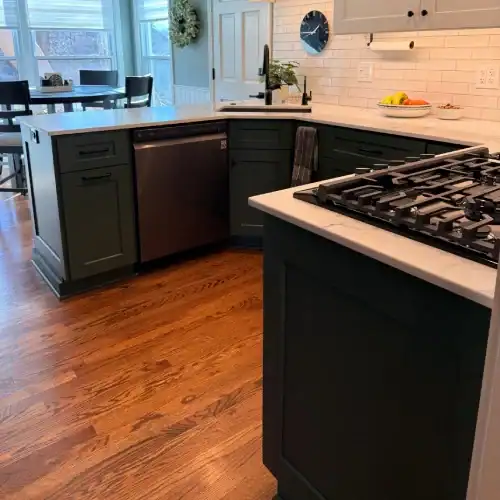
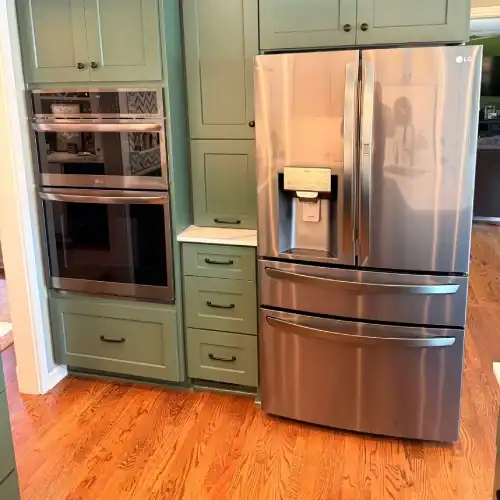
- Cabinetry: Profile Cabinets finished in Sherwin-Williams® Rock Garden and Sherwin-Williams Greek Villa
- Appliances: LG® Black Stainless Steel appliance suite
- Plumbing Fixtures: Delta® Faucet in Matte Black finish
- Sink: BLANCO® SILGRANIT® Sink in the color Cinder
- Beverage Fridge: LG undercounter beverage refrigerator in Black Stainless Steel (dining-room bar)
- Hidden Counter Technology: FreePower™ wireless charging system with under-counter illumination
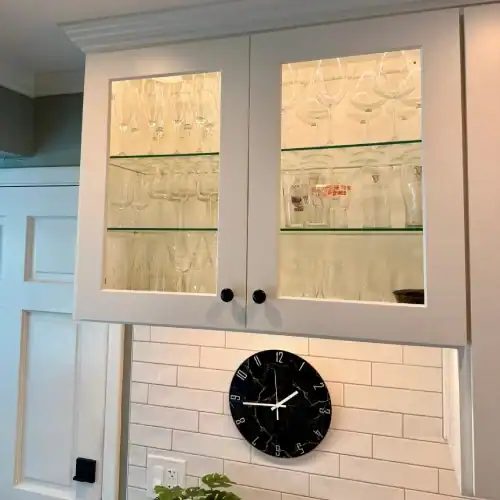
The deep green lower cabinets paired with soft white uppers created a calming, custom feel. Storage upgrades inside the cabinetry made daily use noticeably easier, while finishes were selected to stay relevant long-term rather than follow fleeting trends.
A Kitchen with a History and the Problems Hidden Behind It
Homes that have been remodeled multiple times often carry old issues beneath the surface. This one was no exception.
During early evaluation and demolition, the Stag Homes team uncovered several functional problems that needed to be resolved before new materials could be installed:
- Improper electrical installations from past remodels
- Outdated galvanized plumbing lines
- Drainage issues caused by incorrect sloping
These aren’t the kinds of issues homeowners can see on their own. They only appear when someone takes the time to investigate carefully, and they only get fixed when the builder prioritizes long-term reliability over speed.
Each concern was corrected fully, not patched, not deferred, so the new kitchen didn’t sit on old problems.
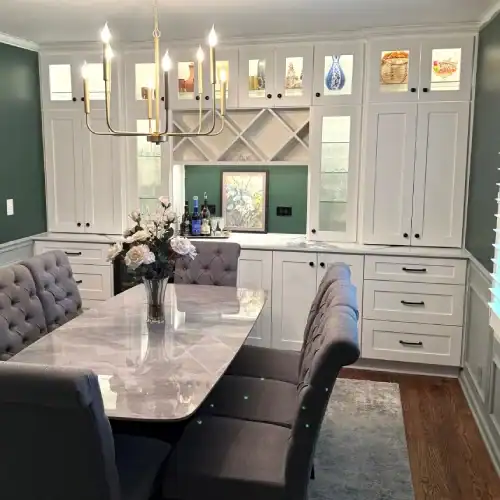
Integrating the Dining-Room Bar: Extending Function Without Adding Square Footage
The homeowners love to entertain, and the dining-room bar played a big role in that. It needed to feel like a natural extension of the kitchen remodel, not an afterthought.
By carrying the same cabinetry style, finish palette, and hardware into the bar area, the team created a sense of continuity between the two spaces. The beverage fridge, floating shelving, and countertop details give the dining room purpose and visual depth without increasing the footprint.
The hidden in-counter wireless charger quickly became a favorite feature. It’s small, but it shows what thoughtful design can do: subtly improving everyday function in ways people immediately appreciate.
Design Decisions That Made a Compact Kitchen Feel Bigger
A defining part of this project was helping the homeowners understand where design would make the biggest difference, and where it wouldn’t.
Instead of stretching the budget thin by reworking walls or relocating plumbing, the team focused on design decisions that offered the highest return on comfort and usability:
- Cabinet interiors tailored to how the clients use their kitchen
- Strategic placement of appliances to streamline movement
- A balanced color story that made the room feel more open
- Lighting and hardware choices that brought cohesion across both spaces
These refinements created a finished project that feels custom, even though the structure remained the same. Homeowners with compact kitchens often assume they’re limited by square footage; this project demonstrates that planning—not space—is what drives the transformation.
Project Team and Collaboration
This project included leadership across design, planning, and build:
- Project Manager: Skylor Alexander
- Design + Color Consultation: Megan Alexander
- Support: Timothy Perryman
The clients also previously worked with Skylor during their patio project, which allowed for a familiar workflow and expectations. Because they understood the design-build process, decisions stayed aligned, and communication stayed steady—two elements that often define the smoothest remodels.
What Made This Project Stand Out
Every project has a defining feature. In this case, it wasn’t a single dramatic change, it was the cumulative effect of hundreds of thoughtful decisions.
What made the project unique:
- The clients embraced working within their footprint rather than fighting it.
- The design process lifted the limitations of a compact kitchen.
- Old remodel issues were resolved, giving the home a safer, more reliable foundation.
- The bar extension brought new function without building new square footage.
- The aesthetic direction delivered a luxury feel without a structural overhaul.
It’s a strong example of what’s possible for homeowners who share similar constraints: a better kitchen, not necessarily a bigger one.
Outcome: A Functional, Elevated Space Built for Real Living
By the end of the project, the clients had a kitchen and dining-room bar that matched how they actually live: welcoming, efficient, and designed with intention.
Benefits the homeowners now experience daily:
- More usable storage and thoughtfully planned cabinet interiors
- A color palette that brings calm and depth
- Safe and fully updated electrical and plumbing systems
- A connected entertaining space that feels cohesive
- A layout that works better without being changed
It’s a transformation grounded not in square footage, but in clarity, planning, and craft—an approach many Kansas City homeowners discover they need once they begin considering their own remodels.
Considering Your Own Kitchen Remodel?
If you’re navigating an outdated kitchen, a tight footprint, or previous remodel issues that make you hesitant to start, thoughtful planning can make a dramatic difference. A design-first process ensures every choice—layout, materials, cabinet functionality, and budget alignment—is made upfront, long before construction begins.
This clarity is what turns limitations into opportunities and builds a remodel that feels intentional at every level, no matter the size of your space.
With deep roots in Kansas City and years spent guiding homeowners through complex projects, Stag Homes offers a steady, local team that understands how to approach each step with care, precision, and accountability.
Enjoy content from Stag Homes Design Build? Make us one of your preferred sources on Google.